Cold calling still works for B2B sales. It's also the part of the job nobody wants. Most calls end at a gatekeeper or a voicemail, and the people who are good at it are too expensive to spend four hours a day dialing.
Our AI cold caller takes on the volume. An AI voice agent calls your prospect list, has the first conversation, and records and logs everything. Anyone who shows interest goes to your team as a warm lead.
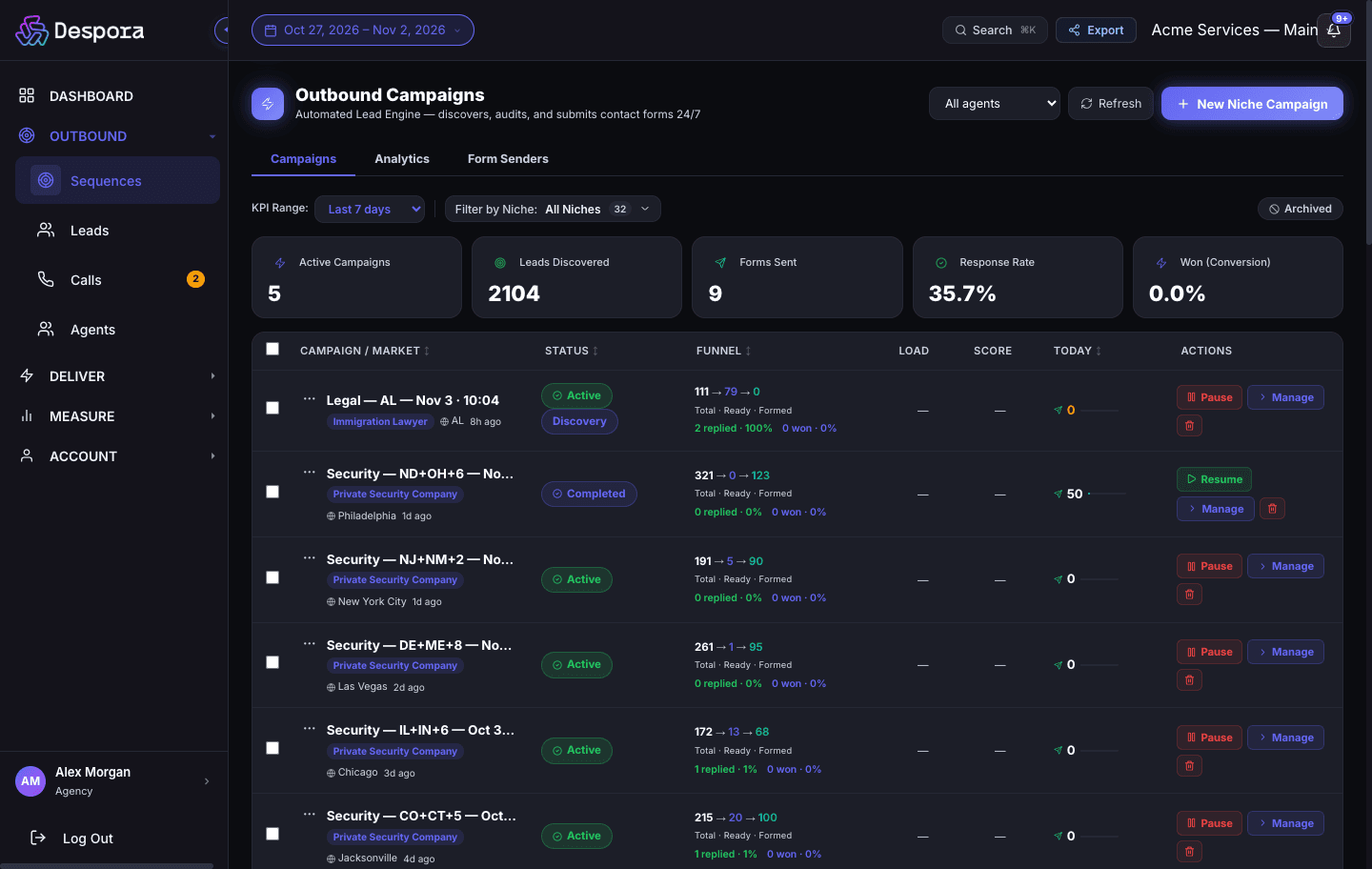
We run this alongside the platform we built for outbound campaign management, and the same call logging, transcription and lead desk we use for our own outreach.
How It Works
- A prospect list comes from your campaigns. Businesses discovered and enriched by a B2B campaign already have a name, website, location and phone number, and the call can refer to what we know about them.
- The AI agent places the call from a dedicated caller ID, so your prospects see a consistent number they can call back.
- Everything is recorded and transcribed, and the AI classifies the outcome.
- Interested prospects reach your team. They appear in your lead management system with the transcript attached, ready for a human follow-up call or email.
- Callbacks are covered. When a prospect calls the number back, your AI answering service or your team picks up.
AI Agents and People Working Side by Side
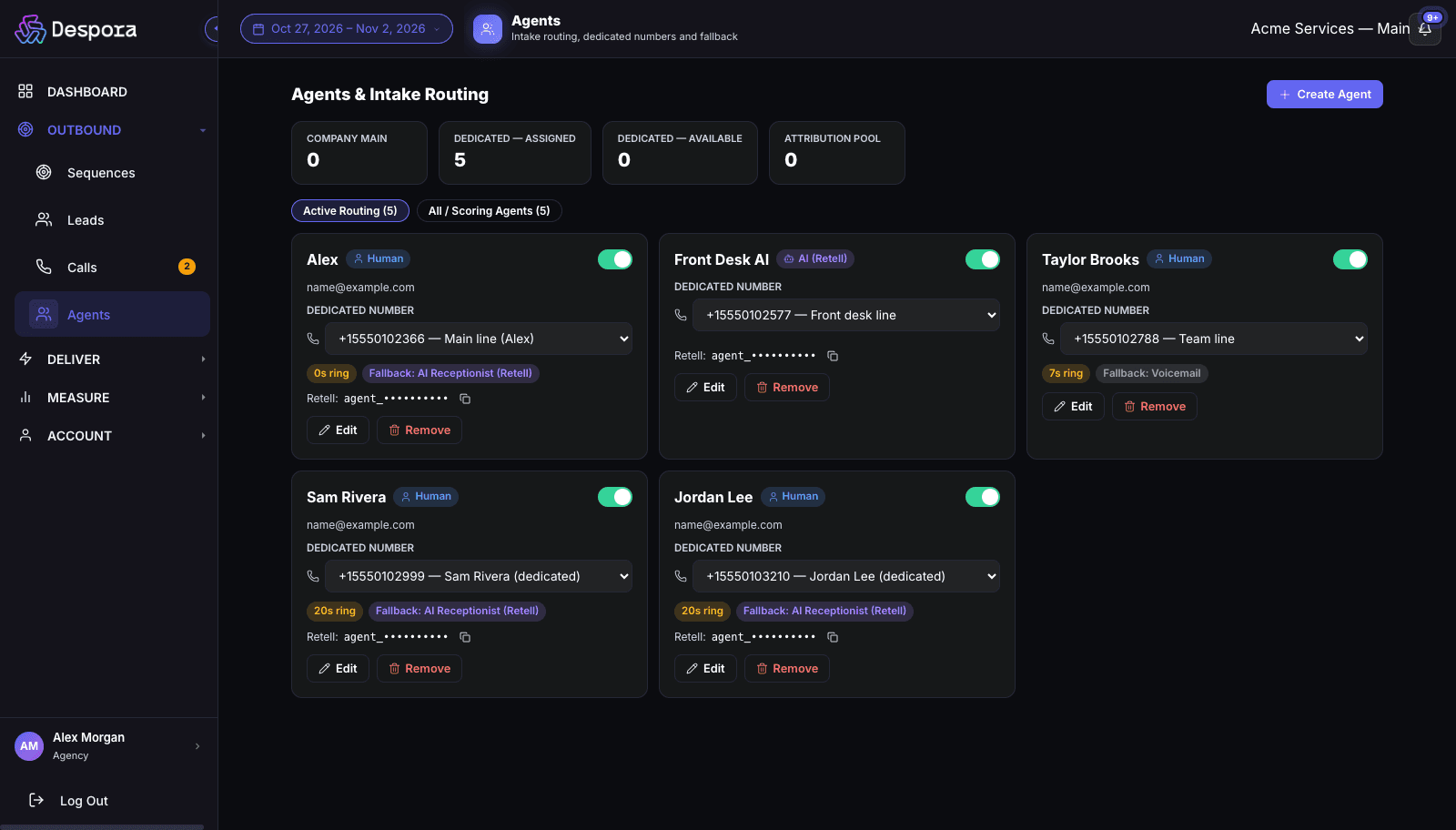
In our platform, AI agents and human reps are managed in the same place.
An AI voice agent is set up as an agent with its own dedicated number. Every outbound call it places is attributed to that agent in the call log, so you can compare what the AI is producing against what your human reps produce, and filter the call list by caller.
Your human reps can also dial from the browser with one click and record calls with the same logging, so the whole outbound effort lives in one system rather than across a dialer, a recorder and a spreadsheet.
Every Call, Logged and Classified
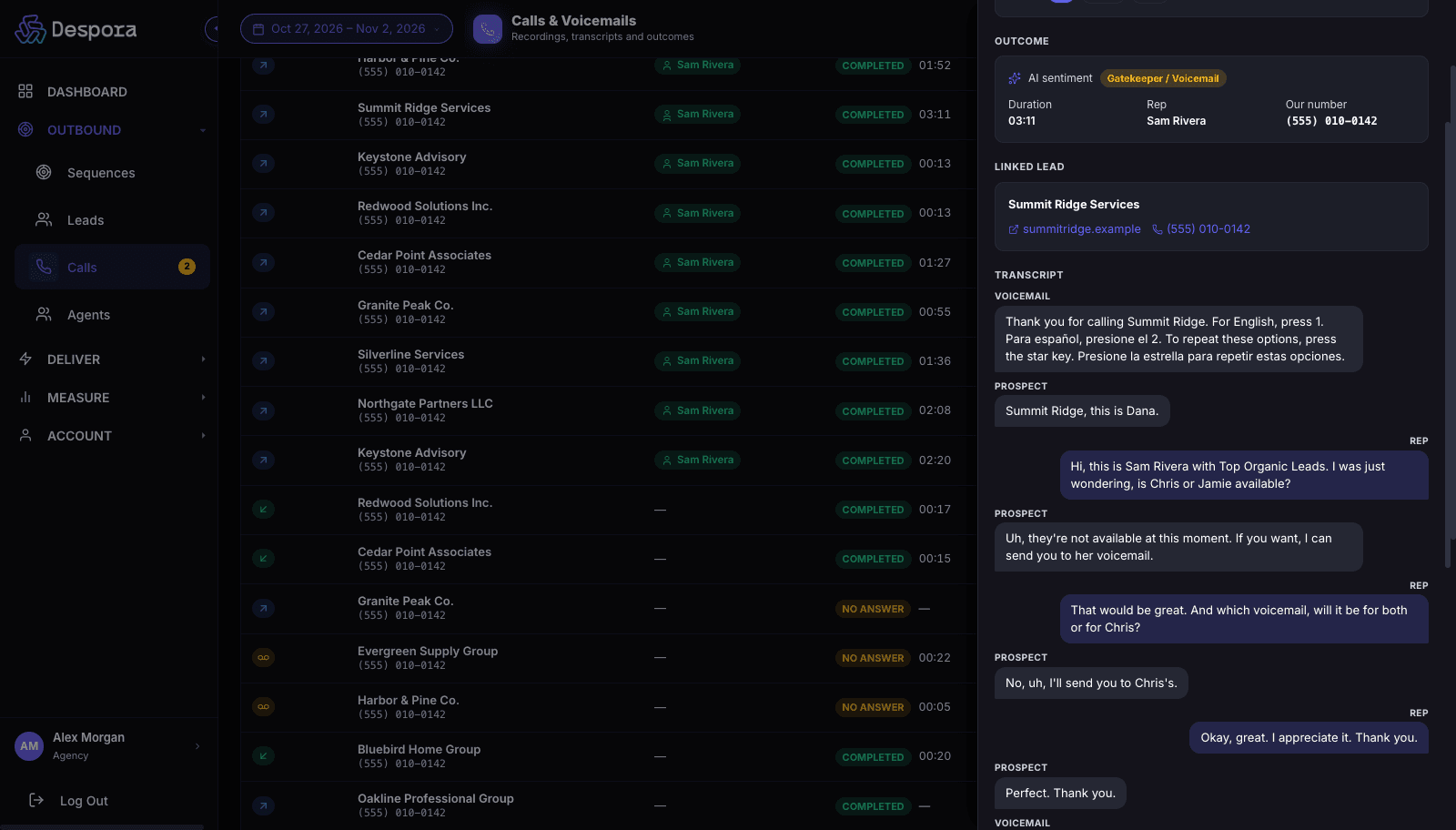
Each call in the log shows who made it, how long it lasted, and its status. Open one to hear the recording and read the transcript, labeled by speaker.
AI assigns each conversation one of five outcomes:
| Outcome | What it tells you |
|---|---|
| Interested | A prospect who wants to talk, so follow up now |
| Follow-up Requested | They asked you to call back or send information |
| Not Interested | A clear no, so you can close it out |
| Gatekeeper / Voicemail | You reached a receptionist or voicemail instead of the decision-maker |
| No Conversation | No meaningful exchange took place |
The example above is a typical cold call: a receptionist answers, the caller asks for a specific person, and is offered that person's voicemail. Reading transcripts like this shows you quickly how your script handles gatekeepers and where it needs to change.
Why Use an AI Caller
- Volume without payroll. Call hundreds of businesses without hiring and training dialers
- Consistency. The AI delivers your message the same way every time and doesn't skip the call after a bad morning
- Every conversation is data. Transcripts show what objections prospects raise and how gatekeepers respond, so your script improves
- Your team talks only to warm prospects. The time-consuming part is handled, and the valuable part stays with people
- Nothing falls through. Every call outcome feeds your lead desk with notes, tasks and follow-up dates
Doing It Responsibly
AI voice calling is regulated, and the rules are changing. In the US, the FCC has ruled that AI-generated voices count as "artificial" voices under the Telephone Consumer Protection Act, and state laws on call recording and telemarketing also apply. We configure campaigns with that in mind:
- We focus on business phone numbers for B2B offers
- Prospects who say they don't want to be contacted are marked Don't Contact
- Greetings can disclose that the caller is an AI and that the call is recorded
- We recommend you confirm your calling approach with your own legal counsel before launch
This is not legal advice. Your obligations depend on your industry, who you call and where.
What's Included
- Setup and tuning of your AI caller, including script, voice and objection handling
- Dedicated outbound caller ID
- Prospect lists from your B2B campaigns, or your own list
- Call recording, transcription and AI outcome classification
- Interested prospects delivered to your lead desk
- Ongoing script refinement based on real call transcripts
Start with an AI cold-calling pilot
Frequently Asked Questions
What is an AI cold caller?
An AI cold caller is a voice AI agent that places outbound sales calls to a list of prospects, holds a natural conversation, and records the result. It is typically used to qualify interest and book follow-ups, with humans taking over once a prospect is engaged.
Does AI cold calling actually work?
It works best as a filter. It's good at reaching a large number of businesses, getting past gatekeepers and identifying who is interested, and it's less suited to complex negotiations. We pair it with human follow-up for anyone who shows interest, and we use call transcripts to refine the script.
Will prospects know it's an AI?
We recommend telling them. The greeting can state that the call is from an AI assistant. Transparency is increasingly required by law and builds more trust than being found out halfway through.
Can the AI transfer a call to my team?
For inbound calls, yes, the receptionist can transfer a live call to a named team member. For outbound calls, interested prospects are passed to your team through the lead desk with the transcript attached, and we can discuss live-transfer options for your setup.
Can I review what the AI says?
Yes. Every call is recorded and transcribed, so you can listen and read it, then request changes to the script.
Is AI cold calling legal?
It depends on who you call, what you offer and where. B2B calls to business numbers are treated differently from consumer calls, and AI voices are covered by the TCPA. We build in Do-Not-Contact handling and disclosure options and recommend a legal review before launch.
How do I get started?
Contact us and tell us who you sell to. We'll propose a small pilot with a defined prospect list so you can see real transcripts and outcomes before scaling.